
Bridge the Gap: When AI Bot Visits Are High but GSC Impressions Are Low
Learn how to interpret AI crawler traffic next to Google Search Console impressions. A careful WordPress workflow for bot hits, referrals, content fixes, and discovery files.
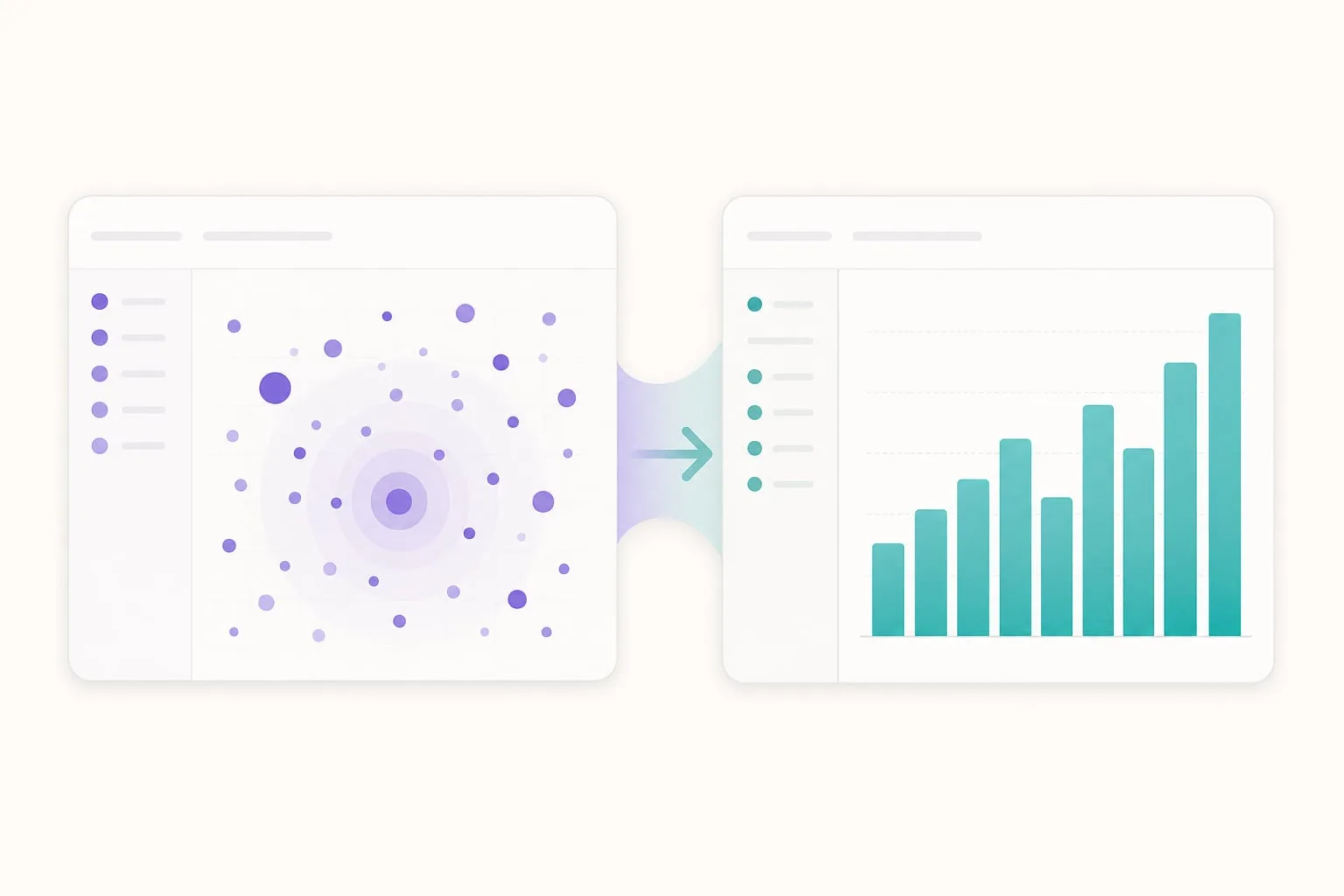
Quick answer: High AI bot visits with low Google Search Console impressions is a signal worth investigating, not a trophy. It means AI-related crawlers fetch the URL while Search visibility is weak. Use that contrast to prioritize technical fixes and clearer content, without assuming citations or “assistant demand.”
This article is the measurement spoke of our AI search readiness cluster.
Two metrics, two jobs
| Metric | Source | Measures | Does not prove |
|---|---|---|---|
| AI bot visits | Server / plugin bot detection | HTTP requests from known AI user agents | Training inclusion, citations, or human questions |
| GSC impressions | Google Search Console | How often a URL appeared in Google Search results | AI assistant usage |
| AI referrals | HTTP Referer when present | Some human visits from AI products | Complete attribution (many clients omit referrers) |
AI Bot Tracking in SEO Booster records crawler hits on WordPress content and can surface purpose buckets (for example training/research vs citation/answer-oriented agents) based on known user-agent classifications. Those labels are helpful for policy, not courtroom proof of what a vendor did with your HTML.
Why the gap appears
Common, defensible explanations:
- Crawlers found the URL through links or sitemaps while the page is poorly matched to Search queries.
- The page answers a niche question that assistants retrieve on demand, but Google still shows stronger competitors for the head terms.
- Technical friction (redirects, soft 404s, slow responses) allows some bots through while Search quality systems stay unimpressed.
- Your snippet underperforms even when the URL could rank (CTR opportunities).
- Bot noise: scanners and misclassified agents inflate “AI” counts if you do not filter to content URLs.
Avoid the leap from “bot hit the page” to “users are asking ChatGPT about us every day.”
A careful workflow in WordPress
1. Build a candidate list
- Open AI Bots / Pages with AI traffic.
- Sort by visits on content URLs (skip junk and search paths when your tools allow).
- Export or note the top URLs.
- In GSC (or GSC Overview), check impressions, clicks, and average position for the same URLs over a comparable period.
2. Triage with status codes first
If AI bots receive 3xx chains, 404s, or 5xx responses, fix those before rewriting copy. A restored URL can regain crawler access quickly; Search impressions usually move slower.
3. Separate three fix tracks
| Track | Questions to ask | Typical actions |
|---|---|---|
| Technical | Redirects? Canonical conflicts? Blocked resources? | Fix headers, links, template bugs; re-run full-page analysis |
| Search presentation | Does the title match queries? Is CTR weak for the position? | Rewrite title/meta; tighten intro; improve headings |
| AI discovery curation | Should this URL be in your shortlist? | Add to llms.txt; consider Entity Map evidence chunks |
4. Improve extractability
Assistants that fetch HTML benefit from the same clarity humans do:
- Direct answer near the top
- Question-shaped H2s where they match real queries (question-based queries)
- Updated facts and versions
- Honest structured data that matches the page
- Supporting internal links from stronger pages
5. Re-measure on a schedule
- Bot hits can change within days after unblock/restore events.
- GSC impressions often need weeks.
- Record what you changed so you do not invent causality later.
Using the gap for curation (not vanity)
Pages that bots already fetch are candidates for your discovery shortlist, especially when they are also commercially important:
- Add the URL to curated
llms.txtif it belongs in the “start here” set. - If you maintain an Entity Map, pin strong evidence chunks from pages bots repeatedly hit (Entity Map docs).
- If the page is thin or off-brand, consider noindexing or consolidating instead of promoting it to AI systems.
Curation is a choice. Not every heavily crawled URL deserves a megaphone.
Referrals deserve a separate lane
When SEO Booster (or your analytics) records human visits with AI product referrers, treat those as incomplete but useful. Many AI clients strip or omit Referer. A quiet referrals report does not prove zero assisted traffic; a busy one still needs landing-page quality checks.
What not to put in a case study
Skip unverifiable story arcs such as “AI visits prove demand, we added FAQ schema, impressions doubled in a week.” Prefer:
- Before/after status codes on bot-hit URLs
- Title/CTR changes with GSC date ranges
- Whether the URL was added to llms.txt or Entity Map
- Explicit uncertainty about citation outcomes
Honesty travels further than screenshots of vanity bots.
Where this fits the readiness stack
Measurement is layer five in AI search readiness for WordPress. It feeds:
- Content fixes on the rendered page
llms.txtcuration- Optional Entity Map evidence
- Policy decisions in AI Traffic
For setup details, see AI traffic docs.
The takeaway
When AI bots love a URL that Search barely shows, investigate. Fix technical issues, clarify the page for both humans and extractors, improve Search snippets, and curate deliberately. Keep bot hits, referrals, and GSC impressions in separate mental buckets so your WordPress roadmap stays evidence-based.
Frequently asked questions
What does high AI bot traffic with low GSC impressions mean?
It means known AI user agents request the URL often while Google Search shows few impressions. That can highlight crawl interest or technical discovery, but it does not prove humans are asking assistants about your brand or that you are being cited.
Can AI crawler hits predict Google rankings?
No. Google Search Console measures Search visibility. AI bot logs measure HTTP requests from AI-related user agents. Treat them as separate systems and look for hypotheses, not automatic ranking forecasts.
How should WordPress sites act on the gap?
Fix status-code and canonical issues first, clarify on-page answers, strengthen internal links, improve snippets for Search, and consider curating the URL in llms.txt or Entity Map when it belongs in your AI discovery shortlist.
Where does SEO Booster show AI bot traffic?
In AI Bot Tracking (AI Bots admin). Pair it with Search Console data in GSC Overview and the prioritization habits in AI search readiness.
On this page